Why Every Generation Must Add Its Voice to the Story of Women’s Rights?
The women’s rights story is one that began long before any of us were born. However, every generation inherits one. It contains chapters written by women who could not vote, who could not own property, and who could not enter universities. It contains chapters written by women who marched, who organised, who went to jail so that the next generation could walk a little further. But no generation gets to write the final chapter. Each generation discovers that the story is not finished. New battles arise. Old victories are threatened. The rights that were won can be lost if they are not defended. And each generation must decide: will it add its voice to the story, or will it let the story grow silent?
Frequently Asked Questions
Why can’t previous generations just finish the fight for Women's rights?
Because rights are not self‑sustaining. They exist in laws, in institutions, in culture. All of these require active maintenance. Laws can be repealed. Institutions can be captured by opposing forces. Culture can shift backwards. Each generation must defend what was won and push forward what remains unfinished. The fight does not end because the forces that oppose women’s rights do not end. They reorganise, they adapt, and they wait for moments of complacency. Each generation must be ready to meet them.
What if I don’t feel like I have anything new to add?
It is natural to want to rest on the gains of previous generations. But enjoying rights without contributing to their defence is a luxury that not everyone can afford. For every woman who feels she can step back, there are women whose rights are actively under threat. The question is not whether you want to add your voice. The question is whether you are willing to let others carry the burden alone. Adding your voice does not mean you must lead a movement. It can mean speaking up in your workplace, voting for candidates who support women’s rights, donating to organisations that fight for them, or simply listening to women whose experiences differ from yours. Small voices, added together, become the chorus that moves history forward.
How can I know which women's rights issues to focus on when there are so many?
No one person can fight every battle. The key is to find where your voice matters most. Start with what you know, what you see, what affects your community. If you are a student, advocate for safer campuses. If you work in a particular industry, fight for equal pay in that industry. If you are a parent, raise children who understand equality. The story of women’s rights is told through millions of individual contributions. However, you do not need to do everything; you only need to do something. And you need to support others who are doing the work in areas you cannot. The movement is strongest when we each add our voice to the part of the story we are closest to.
How Generations Before Us Added Their Voices
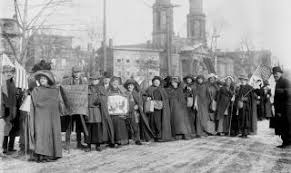
For centuries, women were not considered full persons under the law. They could not vote, own property, or keep their own earnings. The first voices in the story of women’s rights were women who dared to say, I am a person. I deserve to be heard. They wrote pamphlets, organised conventions, and petitioned governments. Their voices were dismissed, ridiculed, and suppressed. But they kept speaking. Because of them, women in many countries won the right to vote. They wrote a chapter that changed everything.
Later generations added new voices. They said, we have the right to work, but also the right to fair pay, to safe conditions, to advancement. They entered factories, offices, and universities. They challenged the idea that a woman’s place was only in the home. Their voices were met with resistance: “You are taking men’s jobs.” “Your place is with your children.” But they persisted. They wrote a chapter that opened doors their mothers could not have imagined.
Another generation added voices about the body. They said, we have the right to control our own bodies, to make decisions about reproduction, to live free from violence and harassment. They brought words like “sexual harassment” and “domestic violence” into public language. They demanded that what happened in private was not beyond the reach of justice. Their voices broke silences that had held for centuries. They wrote a chapter that made the personal political. Each of these generations faced the same question: Will we add our voice? They chose to speak. Because they did, the story grew richer, the rights expanded, and the road shortened for those who followed.
What Happens When a Generation Stays Silent?
Rights that are won can be lost. History shows this clearly. The freedoms one generation secures can be eroded by the next if they are not actively defended. Laws can be repealed. Precedents can be overturned. Cultural gains can be reversed. The story of women’s rights is not a ladder that only goes up. It is a path that must be walked continuously, or it becomes overgrown. When a generation stays silent, it does not mean the story pauses. It means others write it instead. Those who oppose women’s rights are never silent. They organise, they lobby, they push backwards. If the generation that benefits from past victories does not speak up, the story begins to be written by those who would undo those victories.
Additionally, complacency is a quiet danger. When women assume that equality has been achieved, they stop paying attention. They stop organising. They stop demanding. Meanwhile, the forces that resisted every step of progress continue to work. The result is a slow erosion. Pay gaps widen. Reproductive rights shrink. Violence against women goes underfunded and underreported. The generation that thought the story was finished wakes up to find that new chapters are being written without them.
Every generation owes something to the ones that came before. The rights women enjoy today were paid for by the labour, the suffering, the voices of previous generations. To stay silent is to treat that gift as worthless. It is to accept the benefits without contributing to the upkeep. The story of women’s rights is not a finished inheritance. It is a living trust. Each generation must add to it, or it diminishes.
What Must Our Generation Add?
The work of previous generations is not complete. Pay equity remains unachieved. The burden of unpaid care work still falls overwhelmingly on women. Violence against women persists at alarming rates. Political representation, while improved, is far from equal. Our generation must add its voice to these unfinished struggles. We must name what has not yet been solved and demand the solutions that previous generations could not secure.
New challenges have arisen that earlier generations could not have anticipated. Technology has created new forms of harassment and surveillance. The gig economy has stripped protections that women workers once fought for. Climate change disproportionately affects women, especially in the Global South. Reproductive rights are under new and aggressive attacks. Our generation must add its voice to these emerging battles, bringing the tools of our time to fight injustices that did not exist before.
The story of women’s rights has always been connected to other stories. The fight for racial justice, for workers’ rights, for LGBTQ+ equality, and for disability justice is all intertwined. Our generation must add a voice that understands these connections. We cannot tell the story of women’s rights as if all women share the same experience. We must amplify voices that have been marginalised within the movement: women of colour, transgender women, women with disabilities, and women in the Global South. Adding our voice means making the story more inclusive, not claiming to speak for everyone.
Every generation adds its voice not only in grand movements but in daily life. In workplaces, we can speak up for equal treatment. In families, we can challenge outdated roles. In conversations, we can correct misinformation. The story is written not only in laws and protests but in the small moments when someone chooses to speak rather than stay quiet. Our generation must add its voice to the rooms we already occupy.
Wind Up
Furthermore, the story of women’s rights has been written by generations before us. They spoke when it was dangerous. They organised when it was inconvenient. They passed the story to us with more chapters than they received. We did not start the story. But we are living it now. The question is not whether the story will continue. It will. The question is whether we will add our voices to it, or whether we will let others write it without us. Silence is not neutrality. Silence is a choice that allows the story to be shaped by those who would undo what has been gained.
Comments