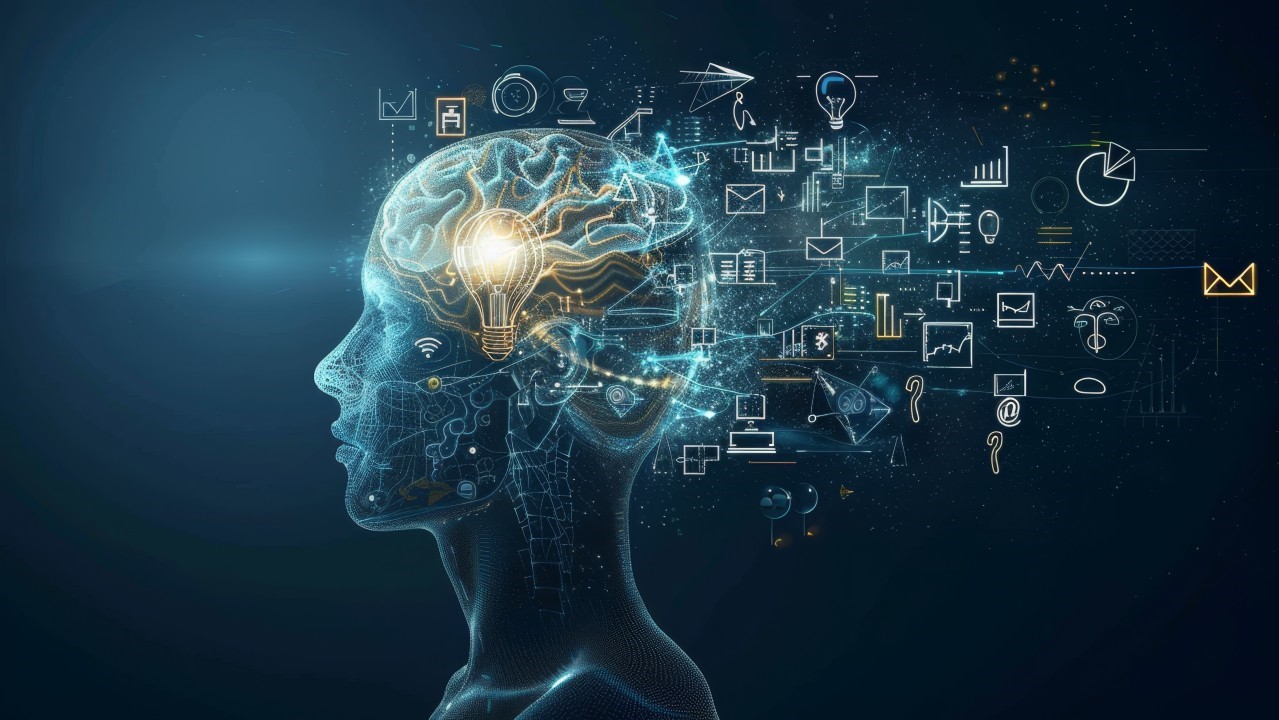
What Happens When Artificial Intelligence Fades Into the Background?
Artificial intelligence is already in your home. You do not see it, and you rarely think about it, but it is there. Think about what happened this morning. Before you left for school or work, you probably watched a video. Did you choose it, or did the screen suggest it? When it ended, did another start automatically? That was artificial intelligence. It guessed what you might want next, and it was probably right.
Think about your journey. If you were in a car, did a map on your phone reroute you around traffic? That was also artificial intelligence. It noticed the traffic before you did and changed your journey without you asking. Here is the strange part. You did not open a tool called "artificial intelligence." You did not type a question to a robot. You just lived your life, and the intelligence was simply there, working quietly in the background. This post is about that quiet work. It is about the moment when a technology becomes so useful and so ordinary that we stop noticing it. First, we will see how beautiful life could be when machines handle the small tasks. Second, we will ask a difficult question: what happens when we can no longer see the things making decisions for us?
The Invisible Milestones of AI
To understand where AI is going, look at how other big changes have already happened. The things that change our lives most do not stay new for long. They become normal. Then they become invisible. Think about electricity. When it first arrived, it was a big deal. Only rich people had it. The lights were strange. People were afraid. If you wanted light, you had to think about electricity. You flipped the switch and wondered if it would work. Now, you never think about electricity. You walk in, flip a switch, and the light comes on. You only notice it when it goes away. When the lights go out in a storm, you suddenly remember how much you depended on something you could not see. Electricity became background. Now think about the internet. When it first came along, you used it on purpose. You sat at a big computer. You heard a screeching noise as it dialled a phone line. You "went online." It was a place you visited, like the shops. Then you logged off.
Today, the internet is not a place you visit. It is everywhere. Your television is the internet. Your phone is the internet. You do not "go online" anymore. You simply are online, all the time. The internet faded into the background. AI is doing the same thing. Right now, most people think of AI as something you talk to. You open ChatGPT. You type a question. A robot writes an answer. But that is already changing. AI is leaving the website. It is moving into your email, finishing your sentences. It is moving into your photos, fixing the lighting without you asking. Soon, you will not open an AI tool. The AI will simply be there, inside everything, working quietly. Just like electricity. Just like the internet.
The Utopian View of Artificial Intelligence
So what happens when we stop seeing it? What does life look like when intelligence is just part of the walls? If we get it right, life becomes smooth. It becomes what thinkers call "frictionless." No bumps in your day. No little jobs that steal your time.
1. The Proactive Environment: Right now, machines wait for you. Your kettle does not boil until you push the button. However, when AI fades into the background, machines act before you ask. They watch. They learn. They move first. Imagine you have had a hard day. You walk through the door, tired. Additionally, you do not have to say anything. The house already knows. It saw on your calendar that you had a long meeting. It noticed from your watch that your heart rate has been high. As you walk in, the lights dim to a warm glow. Quiet music plays. The bath is running. You did not ask. The house just knew. Now imagine your job. Mornings are chaotic. You sit down to fifty emails. In the frictionless world, that chaos is gone. You had a team meeting yesterday. The computer listened, not to spy, but to help. Overnight, it sorted through the meeting. It found your tasks, and it wrote a first draft of your report. It arranged your to-do list. You sit down, and the work is already waiting, half finished.
2. The Death of the Interface: We might stop using screens. Right now, to get things done, you have to type and swipe. That is an interface. When AI fades into the background, the interface disappears. Think about food. Today, ordering dinner is a job. You pick up your phone. You open an app. It takes five minutes. In the future, you will not order food. You will simply be hungry. The system knows you. It knows you eat African dishes on Tuesdays. It knows you are out of milk. So when you feel hungry, you just sit down. Minutes later, the food arrives. You did not swipe. You just felt something, and the world responded.
3. The "Flow" State of Life: Psychologists talk about "flow." It is that feeling when you are so lost in a book that you forget time. Most of us do not feel flow often because life keeps interrupting. The phone buzzes. You remember you need milk. These tiny frictions break the spell. When AI handles the small stuff, the frictions go away. You do not decide what to eat; the food just comes. You do not plan your route; the car already knows. That mental space opens up. You are free to think. Free to dream. That is the promise.
The Psychological Shift of Artificial Intelligence
Before something fades into the background, we must learn to trust it. This trust is a slow shift, and it changes how our minds work.
1. From Conscious Use to Subconscious Reliance: Think about learning to trust a map on your phone. At first, you were careful. You checked the blue dot. But it was right, again and again. After a while, you stopped checking. You just listened to the voice. "Turn left." You turned. You just trusted. This is cognitive offloading. We let the machine carry the mental weight. We stop remembering phone numbers because the phone remembers. We stop memorising directions because the map knows the way. Every time we offload, we get rustier at doing it ourselves. The skill slowly fades.
2. The Assistant Dynamic: We stop seeing Artificial intelligence as a tool and start seeing it as a partner. A hammer is a tool. It does nothing alone. You must swing it. A human assistant is different. You say, "Move this box," and they figure out how. However, you focus on the what, not the how. As AI fades into the background, it becomes that assistant. Today, you type an email. Tomorrow, you will think, "I need to thank Sarah," and the email will be written and sent. You had the thought, and the machine made it real.
3. Loss of Skill vs. Gain of Capacity: If the machine does everything, do we lose our abilities? Take direction. Before phones, people read paper maps. They had a good sense of direction. Now, many young people cannot read a map, if the phone dies, they are lost. So yes, they lost that skill. But here is the other side. Because we have maps, people travel to places they never would have gone. They rent cars in foreign countries. They explore back roads. They gained the confidence to go anywhere. The question is not whether we lose skills. The question is whether what we gain is worth more.
The Dangers of AI Fading into the Background
So far, this sounds lovely. But there is a darker side. When something fades into the background, we stop watching it. And the things we stop watching can control us without our knowledge.
1. The Algorithmic Gatekeeper: Imagine you wake and check the news. You see ten stories. You feel you understand the world. But who chose those ten? You did not. An algorithm chose them. It looked at every story published and decided these were the ones you should see. It hid the other nine hundred. You do not know they exist. This is an algorithmic gatekeeper. When Artificial intelligence is visible, you know it is there. When it fades into the background, you forget it exists. You think those ten stories are simply "the news." You stop asking what was left out. This applies to everything. When you look for a job online, an algorithm decides which jobs to show you. Some you never see. You cannot apply for a job you do not know exists. When you swipe on a dating app, an algorithm decides who to put in front of you. The person you might have married could be hidden on page ten. The background shapes your reality, and you do not even know it is there.
2. The Bias in the Machine: Algorithms are not neutral. People make them, and people have biases. Sometimes they favour rich people over poor people. When the algorithm is visible, we can argue. We can fight back. When it fades into the background, we stop seeing the bias. The unfairness becomes part of how things are. Invisible bias is the hardest kind to fix.
3. The Erosion of Agency: There is another danger. The danger of never wanting anything new. Netflix suggests shows. You watch them. Then it suggests more like them. Over time, you watch only what Netflix thinks you like. You stop browsing. You stay in your bubble. Now imagine that applied to your whole life. The AI knows you like Italian food, so it only suggests Italian restaurants. You never try Thai. You are comfortable. You are never disappointed. But you are also never surprised. The danger is not that the AI controls you. The danger is that you stop wanting to be uncontrolled.
4. The Accountability Void: Finally, there is the question of blame. When something goes wrong in the visible world, we know who to blame. If a doctor gives you wrong medicine, the doctor is at fault. But who do you blame when the background makes a mistake? Imagine you wear a health watch. One night, it notices something unusual. Its algorithm decides it is nothing to worry about. It does not alert you. Three days later, you have a heart attack. The watch could have saved you, but it stayed silent. Who is at fault? You cannot sue an algorithm. The company will say, "It was just a suggestion." But the watch was your only warning system, and it failed. This is the accountability void. When machines make decisions in the background, there is no one to hold responsible.
Wind Up
Here is the paradox. AI's greatest success is its disappearance. When it works perfectly, we do not see it. That is the dream. But when we cannot see it, we cannot question it. It shapes our lives from the shadows. So we must hold two ideas at once. Let AI handle the mundane. Free human minds for human things. But build windows to see the invisible. Teach children to ask why. The future is not about smarter machines. They are already here. It is about how much power we hand to the silence. When the machines fade away, will we still listen for what matters? Or will the silence decide for us?
Comments