Can Forests Survive the Climate They Helped Create?
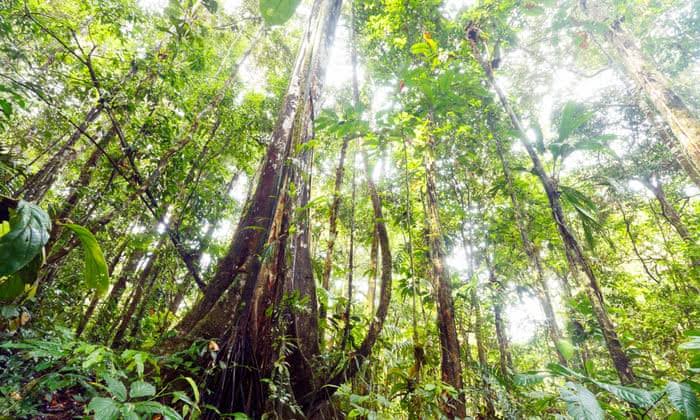
Forests have always shaped the climate. They breathe in carbon, exhale oxygen, create rainfall, and cool the land. For millions of years, they have been one of Earth’s most powerful climate regulators. They helped create the stable conditions that allowed human civilisation to flourish. Now, that same climate is changing. And the forests that helped shape it are among the first to feel the effects. Wildfires rage with an intensity never seen. Droughts stretch for years. Pests that once died in winter now thrive year‑round. The very stability that forests helped build is unravelling, and the trees themselves are caught in the middle.
Frequently Asked Questions
If Forests helped create the climate, doesn’t that mean they will adapt to the new climate?
Forests can adapt, but not at the speed at which the climate is now changing. Natural selection works over generations, but trees take decades to mature. A forest that evolved over thousands of years cannot reorganise itself in a few decades of rapid warming. Additionally, the climate today is changing faster than at any point in the history of modern forests. Adaptation requires time, and time is what we have run out of.
Can planting more Trees solve the problem?
Planting trees helps, but it is not a substitute for protecting existing forests. Young trees store far less carbon than old‑growth forests. They take decades to reach the carbon‑storage capacity of a mature tree. Also, planting the wrong trees in the wrong places can harm ecosystems and reduce water availability. Tree‑planting is part of the solution, but it must be done carefully and alongside deep emissions cuts and protection of standing forests.
Is there any hope that Forests can recover if we reduce emissions?
Yes. If we reduce emissions quickly enough to limit warming, forests have a chance. Many forests are resilient if given time and relief from pressure. Reduced emissions would slow the rate of change, giving trees time to migrate and adapt. It would also reduce the frequency and severity of fires, droughts, and pest outbreaks. Recovery is possible, but the window is narrow. Every year of continued high emissions narrows it further.
How Forests Helped Create the Climate We Know
Forests are the lungs of the planet. Through photosynthesis, they absorb roughly one‑third of the carbon dioxide humans emit each year. This carbon is stored in trunks, roots, and soil. Without forests, atmospheric carbon would be significantly higher, and warming would be even more extreme. Forests have been quietly mitigating the damage of industrial activity for decades. Forests generate rain. Trees release water vapour through their leaves, creating clouds that travel inland. The Amazon alone produces up to half of its own rainfall through this process. Forests also absorb water, preventing floods and releasing it slowly into rivers. They create the hydrological stability that agriculture and cities depend on.
Also, forests cool the air. Their canopies shade the ground, and their transpiration lowers temperatures. Large forested areas create their own microclimates, reducing heat extremes. This cooling effect extends far beyond forest boundaries, influencing regional and even global weather patterns. For millennia, forests helped stabilise Earth’s climate. They absorbed carbon during warm periods and released it during cold ones, acting as a buffer. This balance allowed human societies to develop predictable seasons, reliable rainfall, and stable coastlines. The climate we take for granted was, in part, a product of the forests we are now losing.
How the Changing Climate Is Turning on Forests
Warmer temperatures dry out forests, turning them into tinder. Fire seasons are longer, fires are hotter, and they burn areas that historically never burned. When forests burn, they release stored carbon back into the atmosphere, accelerating warming. Young forests that regenerate after fire are often more vulnerable to the next blaze. The cycle accelerates. Rising temperatures increase evaporation, even when rainfall stays the same. Forests are experiencing water stress that leads to “dieback” widespread death of trees. In the western United States, Europe, and Australia, forests that once thrived are now brown skeletons. When trees die, they stop absorbing carbon and begin to release it as they decompose.
Milder winters allow bark beetles, fungi, and other pests to survive and multiply. Stressed trees have fewer defences. What were once natural population cycles have become sustained attacks. In British Columbia, pine beetles have destroyed millions of hectares of forest. The dead trees then fuel fires, compounding the destruction. When forests burn, dry out, or are logged unsustainably, they switch from being carbon sinks to carbon sources. The Amazon, for example, now emits more carbon in some years than it absorbs. The very forests that helped create the stable climate are now contributing to its destabilisation.
Can Forests Survive? And on What Terms?
Some forests are shifting. Tree species are moving toward the poles and higher elevations. Populations that are genetically more drought‑ or heat‑tolerant may survive. But adaptation is slow, and climate change is fast. Many forests will not be able to migrate quickly enough, especially where landscapes are fragmented by cities and agriculture. Humans can help by planting trees from warmer regions, creating corridors for movement, and reducing other stresses like logging and pollution. This is controversial, but increasingly seen as necessary. The question is whether we can intervene wisely or whether our interventions will create new problems.
Forest survival depends on human choices. We must reduce emissions to slow the rate of change. We must protect existing forests from logging, especially old‑growth stands that store the most carbon. We must restore degraded lands. And we must accept that some forests will not survive in their current form. The goal is not to preserve every tree but to preserve the function of forests as climate stabilisers. If forests collapse, we lose more than trees. We lose rainfall, cooling, biodiversity, and the carbon sink we desperately need. We lose the livelihoods of billions who depend on forests for food, water, and shelter. We lose the last wild places that remind us we are part of nature, not separate from it. The survival of forests is not an environmental side issue. It is central to human survival.
Comments