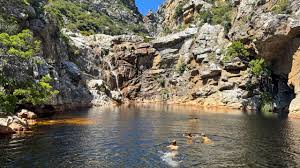
What Secrets Do Rivers and Mountains Hold?
Rivers and mountains are among the oldest things on Earth. They have witnessed the birth and death of continents, the rise and fall of oceans, and the slow evolution of life from single cells to complex societies. They do not speak in words, but they hold stories in their stones, their currents, their layers. A river carries silt from mountains to the sea, tracing a path it has followed for millennia. Additionally, a mountain range records the collision of tectonic plates, the advance and retreat of ice, and the slow carving of valleys by water and wind. Their secrets are not hidden in the way a treasure is hidden. They are written in plain sight, waiting to be read by those who know how to look.
Frequently Asked Questions
How do Scientists “read” the secrets of Rivers and Mountains?
Scientists use a range of tools. Geologists study rock layers, fossils, and mineral composition to reconstruct ancient environments. They use radiometric dating to determine the age of rocks. Hydrologists track water chemistry and flow patterns to understand river systems. Ecologists survey species distribution and genetic diversity to learn how mountains create biodiversity. New technologies like satellite imagery, LiDAR, and environmental DNA (eDNA) allow researchers to see beneath forest canopies and detect life in water without disturbing it. Each discipline adds a layer to the story.
Can Rivers and Mountains “remember” human impacts?
Yes. Pollution, dam construction, deforestation, and climate change leave lasting marks. Sediment cores from river deltas show when industrial pollution began. The loss of glaciers is recorded in retreating ice and in the cultural memories of mountain communities. Even the chemical composition of river water can reveal changes in land use. These records show that human actions are now part of the geological and ecological story of rivers and mountains.
Why should ordinary people care about the secrets held by Rivers and Mountains?
Because those secrets affect daily life. Mountains store water that cities and farms depend on. Rivers provide drinking water, food, and transport. The health of these landscapes determines the stability of the weather, the availability of resources, and the resilience of communities. Beyond utility, they offer perspective. Knowing that mountains have witnessed ice ages and rivers have carved canyons over millions of years can help us see our own challenges in a longer view. They remind us that we are part of a story much larger than ourselves, and that we have a role to play in how that story continues.
The Geological Secrets of Mountains and Rivers
Mountains hold the record of plate tectonics. The Himalayas are still rising from the collision of India and Asia. The Appalachian Mountains contain rocks that were once part of Africa. The Andes show the ongoing subduction of the ocean floor beneath South America. Geologists read these stories in the folds of rock, the presence of marine fossils at high altitudes, and the orientation of ancient fault lines. Mountains reveal that continents move, oceans close, and the Earth’s surface is never still.
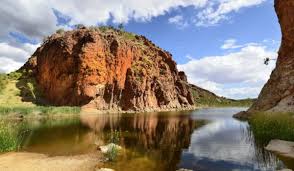
However, rivers cut through layers of rock, exposing millions of years of history. The Grand Canyon, carved by the Colorado River, displays nearly two billion years of geological time. River sediments tell us about past climates: layers of sand indicate ancient deserts, dark organic layers reveal lush forests, and marine fossils high above sea level show where oceans once reached. Rivers are natural drills, giving us access to the past.
Both rivers and mountains bear the marks of past ice ages. Glacial striations on mountain rocks show where ice once flowed. U‑shaped valleys, cirques, and moraines tell of glaciers that have long since retreated. River terraces record periods of changing water levels, reflecting shifts between wet and dry climates. These features are not just ancient history; they offer context for understanding today’s human‑driven climate change.
The Biological and Environmental Secrets
Mountain ranges create a patchwork of microclimates. As elevation changes, so do temperature, precipitation, and soil. This creates distinct life zones stacked one above the other. Species that are isolated on mountain “islands” evolve separately, leading to extraordinary biodiversity. The Andes host thousands of species found nowhere else. The Eastern Arc Mountains of Africa are living museums of ancient plant and animal lineages. Mountains hold the secret of how life diversifies and adapts.
Nevertheless, rivers connect ecosystems. They carry nutrients from mountains to floodplains, from forests to estuaries. Fish like salmon travel hundreds of kilometres to spawn, transporting marine nutrients inland. Rivers also act as corridors for plant and animal movement. The health of a river reflects the health of the entire watershed. A river’s secrets include the intricate connections between forests, wetlands, underground aquifers, and the sea.
Rivers are not just what we see on the surface. Beneath many rivers are hyporheic zones, where surface water mixes with groundwater. These zones are rich in life and crucial for water quality. Mountains contain aquifers that store water for decades, releasing it slowly during dry periods. These hidden reservoirs sustain ecosystems and human communities far downstream. The secret is that what we see on the surface is only part of the story.
Cultural and Historical Secrets of Rivers and Mountains
The world’s great civilisations grew along rivers: the Nile, the Tigris and Euphrates, the Indus, and the Yellow River. Rivers provided water for agriculture, transport for trade, and a reliable source of food. They also posed challenges: floods, shifting channels, and the need for coordinated management. The secrets of early governance, engineering, and law are written in the histories of river valleys.
Mountains and rivers have been revered as sacred across cultures. Mount Fuji, the Ganges, the Amazon, the Himalayas, these are not just geographical features but places of spiritual significance. They appear in origin stories, pilgrimage routes, and rituals. They hold the memory of how people understood their place in the cosmos. The secret is that landscapes shape not only physical survival but also meaning.
However, indigenous peoples have maintained oral histories that record past earthquakes, floods, and volcanic eruptions, often matching geological evidence. Rivers carry memories of ancestral migrations. Mountains bear the names of heroes, spirits, and events. These cultural memories are as much a part of the landscape as the rocks and water. They remind us that humans have always read the land for guidance.
Wind Up
Furthermore, rivers and mountains hold secrets that span billions of years. They tell us how continents moved, how the climate changed, and how life evolved. They reveal the hidden connections that sustain ecosystems and the cultural bonds that give human life meaning. These secrets are not locked away. They are available to anyone who walks a riverbank, climbs a mountain path, or learns to read the language of the land. But there is another secret, perhaps the most urgent one. Rivers and mountains are also sounding alarms. They are losing ice, drying up, burning. The stories they hold are at risk. If we lose them, we lose not only beauty but memory, our own memory of how the world works and our place in it.
Comments