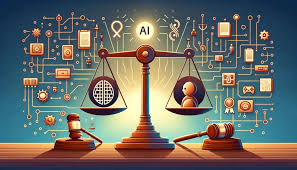
The Ethics of Power in an Artificial Intelligence World
Begin with the reality we already live in. Artificial intelligence decides what news you see. It decides whether you get a loan, whether you are called for a job interview, and how much you pay for insurance. It does not carry a badge. It does not hold an elected office. No one voted for it. Yet it holds power over you every single day. This power is quiet. It does not announce itself. When an algorithm flags your application as high risk, no one sits you down and explains why. When a facial recognition system misidentifies you, there is no appeal. The machine made its decision and isn't answering questions.
Frequently Asked Questions
Can Artificial Intelligence be fair if it learns from biased Human Data?
No, not without intervention. Artificial intelligence learns patterns, and if the data contains bias, the machine will repeat and amplify that bias. It does not know fairness. It only knows what it was shown. The only way to make it fairer is to actively correct the data, to build systems that check for bias, and to keep humans in the loop who can override unfair outcomes. Fairness is not automatic. It must be constructed and guarded.
Who is Responsible when Artificial Intelligence makes a Harmful Decision?
This is the most difficult question, and there is currently no satisfactory answer. Legally, responsibility often falls on no one. The company blames the code. The coders blame the data. The data comes from humans, but those humans are long gone. Ethically, responsibility should rest with the individuals who deployed the system. If you put a machine in charge, you are responsible for what it does. However, the law has not yet caught up to this idea. Until it does, victims will keep falling through the cracks.
Should some decisions be off limits to Artificial Intelligence entirely?
Yes. Some decisions are too important, too personal, too human to be left to machines. Decisions about freedom, about guilt, about who lives and who dies, these require something machines do not have. They require judgment, mercy, and the ability to see a person as more than data. We may build machines that can do many things, but we should never hand them the power to decide matters of life and death, of dignity and worth. Those decisions belong to us. They always will.
The Nature of the Power of AI
Human power usually comes with intention. A ruler wants to rule. A boss wants to manage. A judge wants to judge. There is someone behind the power, someone who chose it, someone who can be questioned about it. Artificial intelligence is different. It holds power but wants nothing. It does not seek control. It does not enjoy deciding. It simply does what it was built to do, and in doing it, shapes the lives of millions. This is power without desire, and it is strangely harder to resist. You cannot argue with something that does not care whether you win or lose.
However, most power in human history has been visible. Kings sat on thrones. Generals wore uniforms. Laws were written down. You could see who was in charge. Artificial intelligence hides its power. It works inside systems you never see. It makes decisions in milliseconds, and by the time you feel the effect, the decision is long past. You cannot watch it work. You cannot stand in front of it and plead your case. The power is everywhere and nowhere, and that makes it nearly impossible to challenge.
Nevertheless, when a human judge makes a mistake, there is a process in place. You can appeal. You can take your case to a higher court. You can argue that the judge was unfair. When artificial intelligence makes a mistake, where do you go? The machine does not have a boss. It does not have a heart to soften. It does not have ears to hear your explanation. It made its choice based on its training, and that choice is final. Power without appeal is not justice. It is just power.
The Danger of the Unelected Decider of Artificial Intelligence
Artificial intelligence learns from human data. That data is replete with history, and history is replete with bias. Old decisions, old prejudices, and old ways of seeing the world are embedded in the numbers. The machine does not question this bias. It does not say, "This is unfair." It simply learns patterns and repeats them at scale. A human who holds bias might be challenged, educated, and changed. A machine that holds bias just gets faster at being unfair. The power becomes entrenched, hidden behind mathematics that most people cannot question.
Additionally, humans can make only a finite number of decisions. A judge sees so many cases. A loan officer reviews so many applications. Artificial intelligence has no such limits. It can decide millions of fates in an afternoon. This means its mistakes are not small. When a biased algorithm decides who gets loans, it does not deny one person. It denies thousands. The power of artificial intelligence is not just deeper than human power. It is wider. It touches everyone, all at once, and when it goes wrong, it goes wrong on a scale we have never seen.
When a human makes a bad decision, we know who to blame. The judge. The officer. The manager. There is a face, a name, a person who can be fired, sued, or voted out. When artificial intelligence makes a bad decision, the blame is scattered. The programmers say they just wrote the code. The company says the machine learned on its own. The data providers say they just supplied the numbers. No one takes responsibility because responsibility cannot be pinned down. The power floats free, attached to no one, and the victims are left with no one to hold accountable.
Reforming the Ethics of Artificial Intelligence Power
The first step is simple but radical. People have a right to know when a machine is deciding their fate. If an algorithm denies you a job, you should be told. If a system flags you as suspicious, you should know. The hidden power must be dragged into the light. This is not about understanding every line of code. It is about knowing that a decision was made by a machine and having the chance to question it. Transparency is the beginning of accountability.
Nevertheless, no important decision should be fully automated. There must be a human somewhere in the process, someone who can look at the machine's conclusion and say, "This does not feel right." The human need not understand how the algorithm works. They just need the authority to override it. This is called human in the loop, and it is the only defence against the cold finality of machine judgment. The machine proposes. The human disposes. The power stays anchored to a person who can be held responsible.
Finally, we need a process. If a machine decides against you, you must have somewhere to go. Someone to talk to. Some way to explain why the machine got it wrong. This is not just about fairness. It is about dignity. Being treated justly means being heard. Machines cannot hear. So we must build human spaces where the unheard can speak. Appeal is not a technical fix. It is a moral one. It says that no matter how smart the machine, the human still matters more.
Wind Up
Nevertheless, Artificial intelligence holds power in our world. It decides, judges, and acts without asking permission. This power is invisible, unaccountable, and growing every day. It brings efficiency but also danger. It brings speed but also silence. The question is not whether artificial intelligence will have power. It already does. The question is whether we will have power over it. Will we let the machines decide in secret, or will we drag their decisions into the light? Will we allow them to judge without appeal, or will we build doors through which humans can knock?
Comments