What Did the 2026 UN General Debate Change About Africa’s Bid for Security Council Representation?
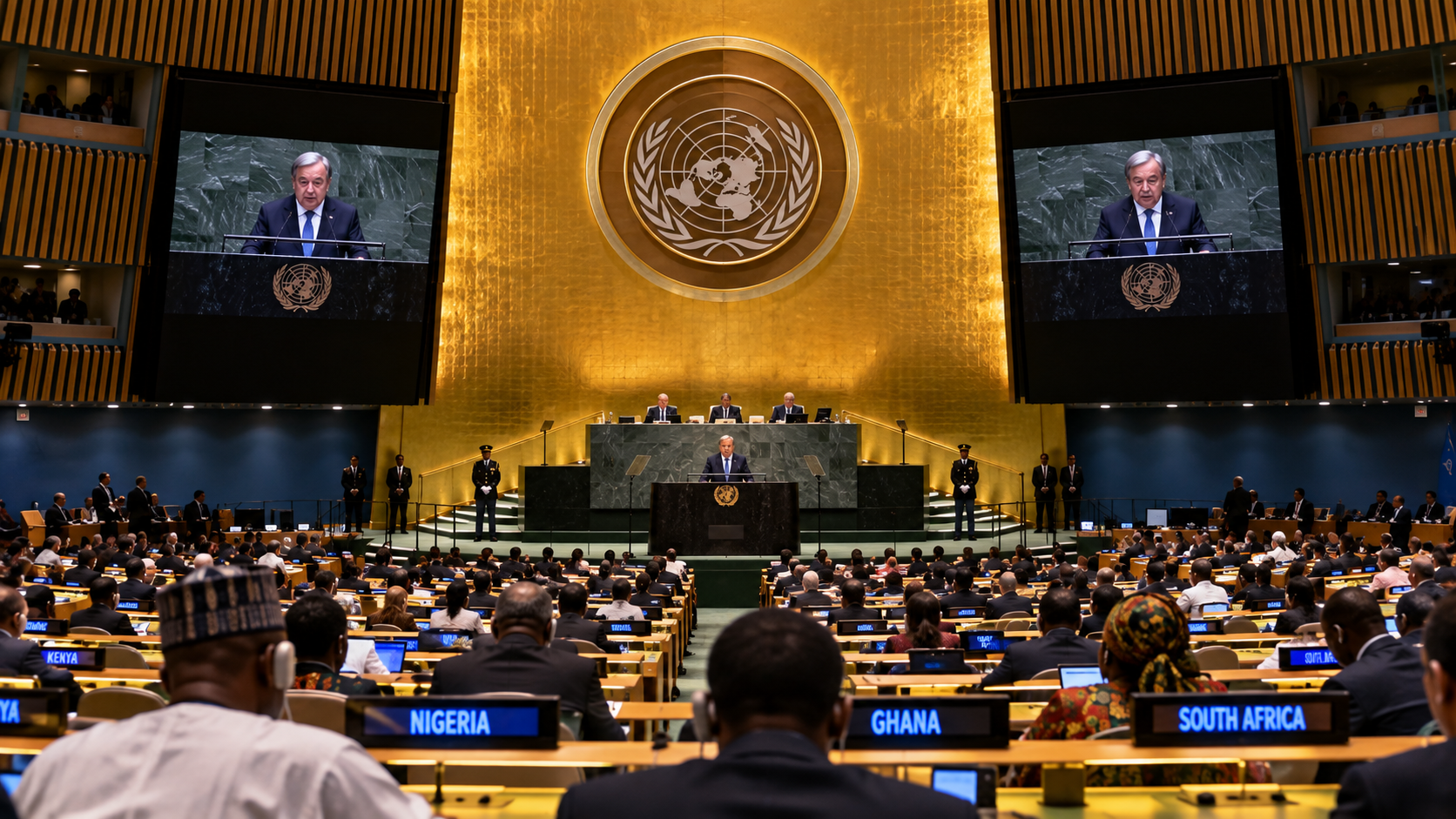
The 2026 United Nations General Debate has ended, but one of its major questions remains unanswered: will Africa eventually gain permanent representation on the UN Security Council? The 81st General Debate took place from 22 to 26 September and concluded on 28 September. During the debate, governments repeatedly called for changes to the Security Council, particularly its representation, membership and ability to respond to today's international challenges. The President of the General Assembly, Khalilur Rahman, also placed Security Council reform among the major issues requiring continued attention. For Africa, however, the outcome was not a new permanent seat. The debate ended without an agreement changing the Council's composition.
So, what did the meeting actually achieve?
Frequently Asked Questions
Did the 2026 General Debate give Africa a permanent Security Council seat?
No. The General Debate did not produce a decision creating permanent African seats.Did African leaders raise the issue?
Yes. African representatives continued to press for the African Union's common position of at least two permanent seats and five non-permanent seats, with the same privileges as existing permanent members, including the veto for as long as the veto remains.Did the UN agree that the Security Council needs reform?
There was broad support for discussing reform, but support for reform does not mean agreement on how the Council should be changed.Is the reform process over because the General Debate has ended?
No. The General Assembly's Intergovernmental Negotiations on Security Council reform continue beyond the General Debate. The closing remarks specifically stressed that the work of the session continues after the high-level debate.Is Africa the only region seeking greater representation?
No. The wider reform discussion includes the representation of other underrepresented and unrepresented regions and groups. UN reform discussions have identified equitable representation as one of the central issues.What the Debate Actually Showed
One of the clearest messages from the 2026 General Debate was that Security Council reform remains firmly on the international agenda. At the opening of the debate, the President of the General Assembly specifically connected Security Council reform with the need to make the Council more representative and reflective of contemporary geopolitical realities. He singled out Africa's underrepresentation as an important example. African representatives also maintained a consistent position.
Kenya reiterated the African model of at least two permanent seats and five non-permanent seats, with full permanent-member privileges, including the veto for as long as it remains part of the Council. The Kenyan position also stressed that Africa should determine which countries would occupy the proposed permanent seats, while the General Assembly would retain its formal role in electing them. Nigeria similarly maintained the African Union position during the General Debate, calling for two permanent African seats and five non-permanent seats. The debate therefore gave the African demand another international platform, but it did not turn that demand into an amendment of the UN Charter.
The Issues That Remain Unresolved
The biggest issue is that political support for reform is not the same thing as agreement on the structure of reform. Countries continue to have different views about whether new permanent members should receive veto power. The current reform discussions include several possibilities, including extending the veto to new permanent members, not extending it, deciding the matter during a later review, limiting the veto or abolishing it altogether. There is also the question of representation itself.
Africa's proposal asks for two permanent seats. But Africa is a continent of many sovereign states. If two countries eventually occupy those seats, how should they represent the wider continent? The African position is that the African Union should select the countries that will occupy the seats. That provides one proposed method of dealing with the question, but it does not end the larger discussion about how long individual countries should hold regional representation. This is where another possible model enters the discussion: rotation.
Rather than treating permanent representation as permanently belonging to particular countries, seats could potentially be associated with regions while countries are elected for longer, renewable terms. A 2026 UN reform paper has even discussed a model involving fixed regional seats whose occupants would be elected by the General Assembly for longer, renewable terms and periodically reviewed. This is important because it shows that the debate is not necessarily limited to a choice between the existing five permanent members and simply adding more countries to that group.
My Argument: Has the Real Question Changed?
The conclusion of the General Debate gives us an opportunity to look at the issue differently.
Africa's demand is clear. It wants permanent representation and does not want a form of membership that gives new permanent members fewer rights than the existing five. But if the central problem is inadequate representation, another question deserves attention: should reform create more countries with permanent power, or should it create a system through which different regions can receive meaningful and recurring representation?
Africa is not the only part of the world without a permanent member. That means the reform conversation can be broader than Africa alone.
This does not take anything away from the African Union's demand. Instead, it asks whether the solution to historical underrepresentation should be to reproduce the permanent-seat system on a larger scale or to reconsider how representation itself works.
The 2026 General Debate did not answer that question. Perhaps that is one of the most important things to take from the meeting. The discussion has moved forward politically, but the fundamental disagreement over who should have permanent power, who should represent regions and whether the veto should accompany new permanent seats remains.
Wind Up
The 2026 UN General Debate ended without granting Africa a permanent seat on the Security Council. It also did not produce a final agreement on Security Council reform. What it did provide was another opportunity for governments to place the question of representation at the centre of the international conversation. The General Assembly leadership explicitly linked reform with greater representation for underrepresented regions, while African representatives continued to defend the continent's demand for two permanent seats and five non-permanent seats.
The issue therefore does not end with the closing of the General Debate. The negotiations continue.
And the difficult questions remain: Should Africa receive two permanent seats? Which countries should occupy them? Should they rotate? Should new permanent members have veto power? And should reform address only Africa's exclusion or the wider problem of regions that lack permanent representation? The 2026 debate did not settle these questions. It simply showed that the conversation is far from over.
Comments