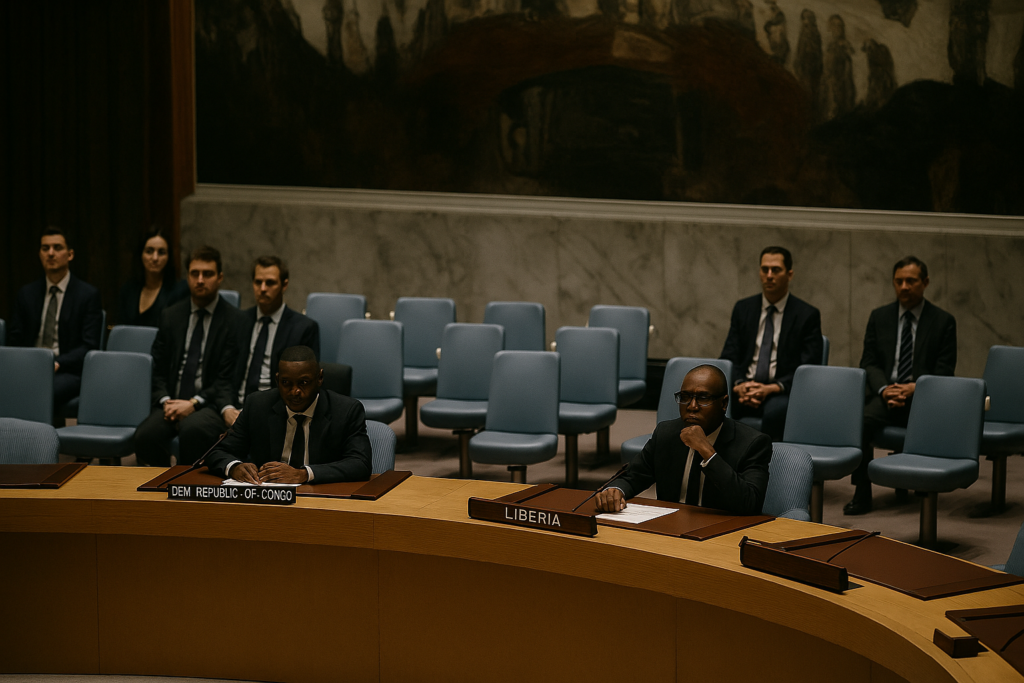
Africa, South America and Oceania: Who Gets a Permanent Voice at the UN?
The UN was established in 1945 to help prevent another world war and promote international peace and security. Nevertheless, more than eight decades later, an important question remains: does the structure of the UN Security Council give every part of the world a fair opportunity to influence decisions that affect humanity? The Security Council has 15 members. No country from Africa, South America or Oceania holds one of these permanent positions.
Additionally, Africa's demand for permanent representation has therefore become part of a wider debate about fairness and the distribution of power at the United Nations. It is also about how the international community should decide which countries deserve a lasting voice in a body responsible for maintaining global peace.
Frequently Asked Questions
Does Oceania have a permanent seat?
However, no country from Oceania has a permanent Security Council seat. Countries in the region can participate in UN affairs and may seek elected positions where eligible.
Why does permanent representation matter?
Permanent members enjoy continuity and possess veto power. They can block substantive resolutions even when the proposal has broad support among other Council members.
Discussion and Arguments: The difference between having a voice and having power
However, the Security Council has particular responsibility for international peace and security, and its decisions can carry significant political and legal consequences. A country elected to the Council can contribute to debates, negotiate proposals and vote on resolutions. Nevertheless, its membership ends after its two-year term, and permanent members, by contrast, retain their positions and have the power to veto substantive decisions. This difference means that not every country has the same influence in one of the UN's most powerful bodies.
Africa's demand and the question of fairness
Africa's position is especially significant because the continent has 54 UN member states but no permanent representative on the Council. Additionally, this demand is based on the argument that Africa should not continue to be excluded from permanent decision-making, particularly when the Council frequently considers issues affecting the continent.
However, the debate raises another question. If the purpose of reform is to make the Council more representative, should the international community consider only Africa's demand, or should it also examine the position of other underrepresented regions? Latin America and the Caribbean have raised their own concerns about representation, while small island states, including those in the Pacific, have particular interests in international security and climate-related threats. Recognising these concerns does not mean Africa's demand should be dismissed. Rather, it suggests that reform should consider the wider problem of unequal representation.
Who would represent an entire region?
Giving a region a permanent seat does not automatically mean every country in that region will feel represented. Africa, for example, is a continent with different political interests, languages, economies and security priorities. The same applies to South America and Oceania. If two African countries were selected for permanent membership, how would the remaining African states participate in choosing them? Would the selected countries consistently represent the collective interests of the continent, or would their national priorities sometimes take precedence?
Similar questions would arise if a South American or Pacific country gained a permanent seat. A permanent member represents its own state, not every country in its geographical region. This is why the method of selecting new permanent members matters as much as the number of seats created.
Should permanent seats be replaced by a fairer system?
One possible approach is to expand permanent membership to include currently underrepresented regions. Another is to increase elected membership and strengthen regional rotation, allowing more countries to serve over time. A third approach would examine whether permanent membership and the veto should continue in their current form. Such proposals face political and legal obstacles, and there is no agreement among UN member states on one model of reform.
My argument is that geographical fairness should be considered across the international system rather than addressed through isolated changes that might create another privileged group. If the Council is to become more representative, its reform should explain how countries and regions will gain meaningful influence, how representatives will be selected, and how accountability will be maintained.
Wind Up
Africa's demand for permanent seats deserves serious consideration, while the concerns of Latin America, the Caribbean and Pacific states should not be overlooked. Adding countries to the permanent membership may improve representation, but it will not automatically guarantee fairness for every state. The real challenge is to create a Security Council that reflects today's world rather than preserving a structure shaped by the political realities of 1945. Reform should be judged not only by how many countries receive permanent seats, but also by whether the resulting system becomes more representative, accountable and effective.
Comments