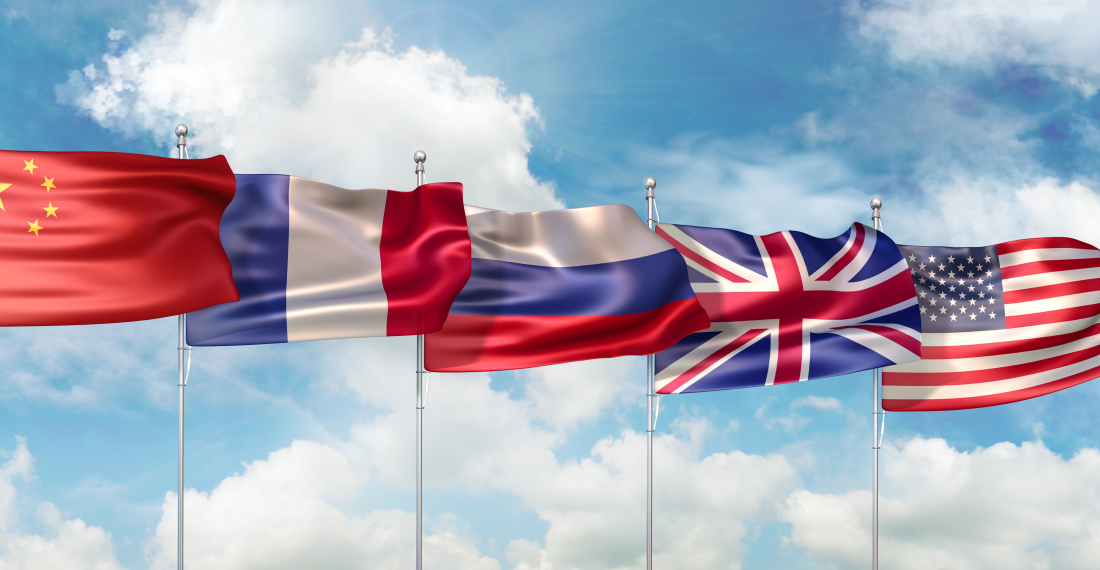
How Did the United States, Russia, China, France and Britain Become Permanent Members?
The UN Security Council is responsible for maintaining international peace and security, but its structure reflects a particular moment in history. When the United Nations was established in 1945, five countries received permanent seats and special voting powers. More than eighty years later, those positions remain at the centre of debates about international authority and fairness.
The five permanent members are the United States, Russia, China, France and the United Kingdom. Their status was not awarded through a modern global election. It emerged from the negotiations that followed the Second World War, when the victorious Allied powers sought to build a new international system. Understanding how these countries became permanent members helps explain why reform has proved so difficult and why many states argue that the Security Council no longer reflects the world as it exists today.
Frequently Asked Questions
Why were these five countries selected?
They were regarded as major powers with central roles in the Allied victory and in the proposed post-war international order. The founders believed their participation was essential to the new organisation's ability to maintain peace.
Was Russia originally a permanent member?
The Soviet Union, not the Russian Federation, was the original permanent member. Russia continued the Soviet Union's Security Council seat after the Soviet Union dissolved.
Why is China a permanent member?
China was recognised as one of the major Allied powers during the Second World War and was included among the original permanent members in the UN Charter. The government representing China at the United Nations changed in 1971.
Why were there only five permanent members?
The permanent membership was determined through the political negotiations that shaped the UN Charter. It was not designed through a process that gave every region an equal chance to obtain a permanent seat.
Have the five permanent seats changed since 1945?
The identity of the state occupying China's seat changed in 1971, and Russia succeeded the Soviet Union's seat in 1991. However, the number of permanent seats has remained five.
Discussion and Arguments: The world after the Second World War
The United Nations was created as the Second World War came to an end. The conflict had caused enormous loss of life and destruction, and governments wanted an international organisation that could help prevent another global war. The League of Nations, established after the First World War, had failed to prevent the outbreak of another major conflict. The architects of the United Nations therefore sought a system that would encourage cooperation among the most powerful states rather than leave them outside or opposed to the organisation.
The United States, the Soviet Union, China, France and the United Kingdom were assigned permanent positions because of their roles in the Allied coalition and their importance to the emerging post-war order. The special status was a political arrangement embedded in the UN Charter, not a judgement that these countries would always be the most deserving representatives of humanity.
Why did they receive the veto as well?
Permanent membership came with a special voting privilege. The founders understood that the major powers might refuse to cooperate with an organisation that could impose major decisions against their wishes. Nevertheless, the veto was part of the compromise intended to keep them involved. It meant that a substantive Security Council resolution could not be adopted if one of the five permanent members voted against it. This arrangement may have helped secure the participation of the major powers, but it also established a hierarchy within the Council. The five countries gained a position that other UN members could not obtain through ordinary elections.
What happened to the original membership?
The original permanent member was the Union of Soviet Socialist Republics, commonly known as the Soviet Union. After its dissolution in 1991, the Russian Federation continued its Security Council membership. China's seat also has a significant history. The Republic of China was named in the original Charter. In 1971, the UN General Assembly adopted Resolution 2758, recognising the representatives of the People's Republic of China as the only legitimate representatives of China to the United Nations. The People's Republic of China subsequently occupied China's seat, including its permanent position on the Security Council. France and the United Kingdom retained their permanent seats throughout these changes. The five-seat structure remained intact.
Why has the system lasted so long?
Additionally, the answer lies partly in the legal process for amending the UN Charter. Major changes require approval by two-thirds of the General Assembly and ratification by two-thirds of UN member states, including all five permanent members. This gives every existing permanent member a decisive role in whether a Charter amendment can take effect. There is also disagreement among UN members about what reform should look like. Some countries want new permanent seats. Others favour expanding elected membership, increasing regional rotation or changing the veto system. Agreement on who should receive new permanent positions is particularly difficult.
Does the history still justify the current arrangement?
The five countries' roles in the Second World War help explain why they were selected in 1945. However, history alone does not settle whether the same structure remains fair today. The world has changed. Many states that were colonies when the United Nations was founded have since gained independence. The organisation has grown from its original 51 founding members to 193 members. Africa and Asia have gained many independent states, while international security concerns now extend across regions and issues that were not understood in the same way in 1945.
My argument is that the history should be understood, but it should not end the discussion. If the Security Council is intended to serve the international community, its structure must be open to serious examination. Reform should consider Africa's demand for permanent representation, the concerns of Latin America and the Caribbean, the interests of small states, and the wider question of whether permanent membership and the veto remain appropriate. Adding new permanent members might correct some gaps, but it could also create a larger privileged group. Reform therefore needs to address not only who sits at the table, but also how power is distributed once they are there.
Wind Up
The United States, Russia, China, France and the United Kingdom became permanent members because of the political settlement that followed the Second World War. Their positions were designed to secure the participation of major powers in the new international organisation and to give them a special role in maintaining peace. That historical explanation does not automatically prove that the arrangement remains the best one. The United Nations now represents a much larger and more diverse international community, yet its permanent membership still reflects the choices made in 1945. The challenge is to preserve the Council's ability to act while making its representation and decision-making more legitimate. Understanding how the five permanent members acquired their status is an important first step towards asking whether that status should continue unchanged.
Comments